How to Forage Fatwood in Persistently Wet Woodlands
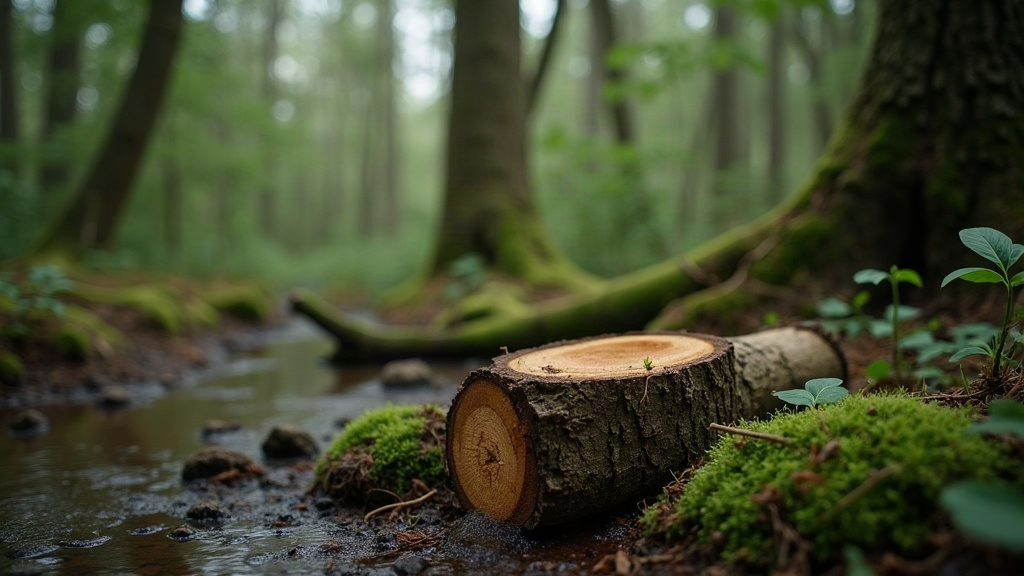
Foraging and Processing Fatwood in Persistently Wet Woodlands
Trying to get a fire going in a forest that never seems to dry out can feel like a losing battle. But once you know how to forage and process fatwood, the whole equation changes. Fatwood, the resin-saturated heartwood found inside pine trees, is about as close to a guaranteed fire starter as nature gets. That dense sap doesn’t just resist water, it laughs at it, igniting even after a full soaking—especially useful when building fires in waterlogged conditions. If you’ve ever tripped through the Pacific Northwest, the Scottish Highlands, or any of those perpetually damp temperate rainforests, you already know why people call this stuff “nature’s napalm.” This guide covers where to hunt for it, how to spot it when the whole forest is dripping, and how to break it down into something that’ll actually catch a spark.
Why Fatwood Matters So Much in Wet Conditions
Here’s the biology behind it: when a conifer (pine, spruce, fir, take your pick) gets wounded or starts dying, it floods the damaged area with pitch to seal things up. Give it a few years, especially around stumps and where branches meet the trunk, and that resin hardens into something dense and almost waxy. The result burns like nothing else in the forest.
What makes it a lifesaver for wet-weather bushcraft specifically is that all that resin acts as a built-in waterproofing layer. You could have a dead log sitting there, outer bark spongy and completely waterlogged, and the fatwood core inside stays bone-dry. It just doesn’t rot the way normal firewood does. That’s the whole trick.
Finding Fatwood When Everything Around You Is Soaked
You have to train your eyes to look past the moss and the rot, because that’s where most people give up. A few pointers:
- Go straight for dead conifers. Fallen pines, standing deadwood, anything evergreen. Skip the hardwoods entirely, oak, ash, maple, they simply don’t make fatwood no matter how old or rotted they are.
- Dig into old stumps. The taproot area and the center of a decayed pine stump are often solid gold. I’ve kicked apart stumps that crumbled like wet cardboard on the outside, only to find a dense, resin-rich core still intact underneath.
- Inspect branch joints. Where lower branches meet the trunk on a standing dead pine, resin tends to pool up, since the tree reinforces these spots to hold the branch weight.
- Trust your nose and eyes. Scrape the wet gray surface off a likely stump with your fixed-blade knife. A sharp, turpentine-like smell (think pine floor cleaner) should hit you almost immediately. Visually, good fatwood runs deep amber, sometimes almost translucent, or a rich reddish-orange.
Processing Fatwood Once You’ve Found It
Locating the wood is only half the job. Processing it properly matters even more when your fingers are numb and everything around you is dripping wet.
1. Harvest the Core
Grab a folding saw and cut off a resin-heavy branch joint, or use a small forest axe to chop away the rotten shell of a stump until you reach the solid center. Don’t waste your energy hacking through the thick parts blindly. Carve away the soft, waterlogged exterior first, that’s where the actual fatwood core reveals itself.
2. Baton It Down
Take a sturdy fixed-blade knife and baton the chunk into smaller sticks, roughly pencil-thick. You’ll notice right away that this wood feels heavier than it should, and it might even be a little sticky under your fingers. Splitting exposes the inner fibers, and those catch far more easily than the outer surface ever would.
3. Shave It Fine
In a persistently wet woodland, ambient moisture is working against you the entire time, so surface area becomes everything. Run the 90-degree spine of your knife hard along a fatwood stick and build up a pile of fine, curly shavings. These “fatwood curls” take a spark from a ferro rod almost instantly, and they burn hot enough, long enough, to dry out damp kindling sitting right next to them.
A Few Tips for Actually Getting the Fire Lit
- Build off the ground. Never lay your fire straight onto wet mud. A quick platform of wrist-thick sticks or dry bark keeps your shavings away from ground moisture.
- Block the rain. Use your body, a jacket, or a tarp to shelter the tinder bundle while you’re striking the ferro rod. Even a few seconds of exposed rain can ruin a good spark attempt.
- Stash extra sticks. Whenever you stumble on a solid fatwood source, process more than you need right then. Toss a few sticks in a waterproof pocket or dry bag. Knowing you’ve got a guaranteed dry fire starter tucked away takes a surprising amount of stress off a rough night.
Final Thoughts
Learning to forage and process fatwood in persistently wet woodlands is one of those bushcraft skills that quietly separates a miserable, shivering night from a warm, functional camp. Once you can spot that telltale amber core hiding inside a rotted pine stump, and know how to reduce it down to fine, flammable shavings, you’ve basically solved the fire problem for good. Rain can keep falling all it wants. You’ll still get your fire going.