Pump Drill for Reliable Friction Fire in Jungle Humidity
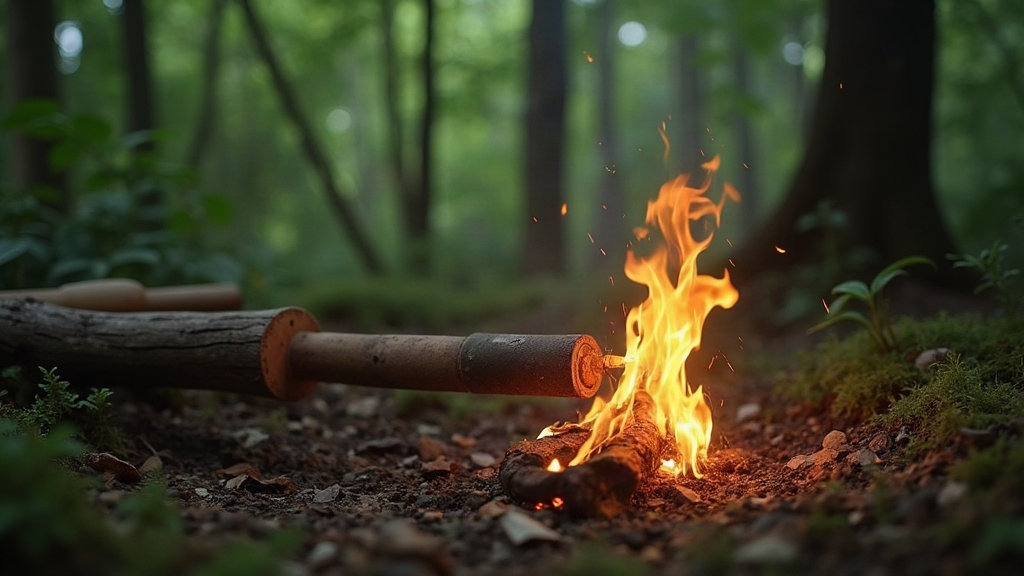
Building and Tuning a Pump Drill for Wet Jungle Conditions
If you’ve ever tried a bow drill in a tropical rainforest, you know the drill (pun intended): everything’s damp, your cordage stretches or rots halfway through, and the spindle loses friction right before it hits char stage. Frustrating doesn’t quite cover it. A pump drill gets around this by using mechanical leverage and a flywheel to spin faster and more consistently, so you’re not entirely at the mercy of perfectly dry materials. This guide walks through building one and dialing it in for reliable fire-starting even when the humidity is working against you.
Why a Pump Drill Beats a Bow Drill in the Jungle
A bow drill lives or dies by controlled hand pressure, a taut bowstring, and steady rhythm. All three fall apart the moment your palms get sweaty, your cordage turns slick, or the wood swells with moisture. A pump drill sidesteps that problem entirely. It stores energy in a weighted flywheel and releases it through a simple up-and-down pumping motion. In wet climates, that gives you three real advantages:
- Higher rotational speed. The flywheel keeps spinning on momentum alone, which means more heat generated per stroke than you’d get from manual sawing.
- Consistent downward pressure. Gravity and the crossbar do the pressing for you, so there’s less room for human error when your grip is slippery.
- Less reliance on cordage friction. Your hands just pump up and down. No sawing motion against a bowstring that can slip the second it gets wet.
Gathering Jungle-Appropriate Materials
In a humid rainforest, picking the right wood matters more than your technique ever will. Here’s what to look for:
- Spindle wood: Go with something dense but still workable, like hibiscus, cecropia, or a bamboo root node. Skip waterlogged deadfall. Scratch the surface with a fingernail: it should feel dry-ish and peel off a light, clean shaving, not a soggy curl.
- Fireboard wood: Match it closely to the spindle’s hardness. Pair a softer board with a harder spindle and you’ll get more consistent dust buildup.
- Flywheel: A dense, flat hardwood disc works, as does a thick bamboo cross-section or even a stone with a hole drilled through the center. Weight matters here. Aim for somewhere between 200 and 400 grams, depending on how thick your spindle is.
- Crossbar and cordage: Paracord is the move in jungle humidity, full stop. Natural fiber cordage (inner bark, for instance) stretches and weakens fast when it’s constantly wet, so it’s worth packing a length of synthetic cord just for this purpose.
Step-by-Step Construction
- Shape the spindle to about pencil thickness, tapering one end down to a blunt point.
- Drill or carve a hole through your flywheel material and seat it snugly at the spindle’s midpoint.
- Attach the crossbar using two lengths of cordage, running from each end down to the base of the spindle. Leave enough slack for a full pump stroke, you don’t want it binding halfway down.
- Carve the fireboard with a shallow depression and a notch cut out to the edge for ember collection. Angle it so hot dust falls onto a dry ember pan. This part is non-negotiable in humid environments, since ground moisture can snuff out a fragile coal in seconds.
- Pre-charge the socket by spinning the spindle briefly without the board in place, just to smooth out the contact point before you go for real.
Tuning for High Humidity
- Pre-dry your components near (not in) a small flame or warm coals for 10 to 15 minutes before you start. Even a little dampness in the wood raises the ignition threshold more than people expect.
- Keep a dedicated “dry kit.” A small waterproof bag holding your fireboard, spindle, and tinder bundle means they’re never sitting out absorbing ambient moisture between attempts.
- Use resinous or fatwood tinder as your ember catcher. It lights far more reliably than fibrous tinder that’s been soaking up water vapor from the air.
- Work in short, powerful bursts instead of long, lazy pumping. Faster rotation builds heat quicker than moisture can pull it back out.
Common Mistakes to Avoid
- Using green or freshly cut wood. It needs to be seasoned, jungle or not.
- Letting the ember pan touch wet ground. That alone can kill your coal instantly.
- Over-tightening the cordage, which chokes the flywheel’s momentum and defeats the whole point of the design.
Conclusion
A pump drill isn’t just a neat bushcraft build to show off at camp. It’s a genuine upgrade for anyone who needs reliable fire in a consistently humid environment. Stick to dense, well-matched woods, carry synthetic cordage, and keep a disciplined dry-storage habit, and one of the most frustrating survival skills in the tropics turns into something you can actually count on.