Processing Stinging Nettle Stalks into High-Tensile Cordage
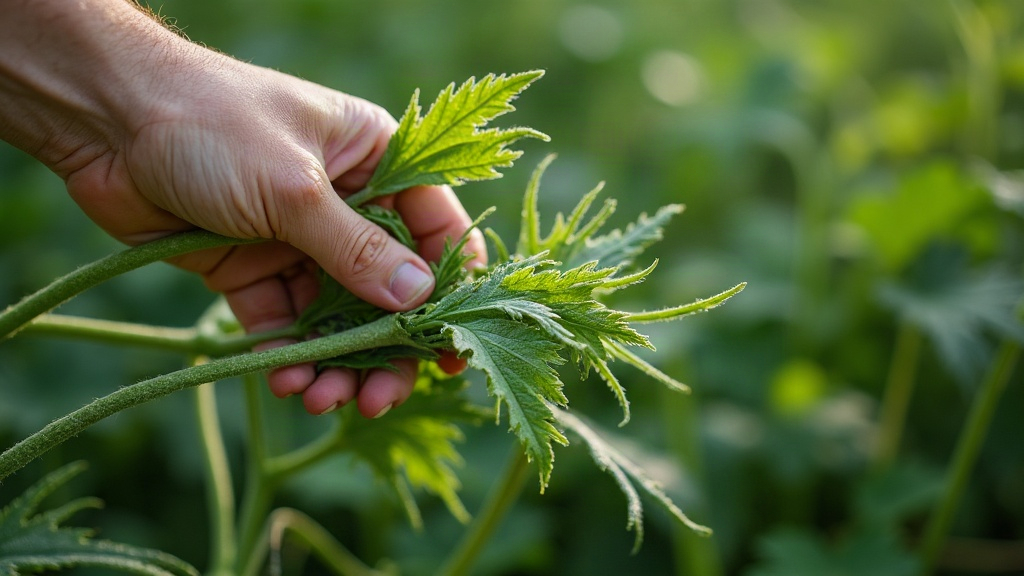
Stinging nettle (Urtica dioica) might be the best-kept secret in traditional fiber craft. Harvest the stalks at the right moment, process them correctly, and you end up with cordage strong enough to give commercial twine a run for its money. People have used this trick for thousands of years, in basketry, fishing lines, even early cloth. Late summer, right as the plant starts to die back, is your window. Here’s exactly how to turn a patch of “weeds” growing behind the shed into high-tensile rope.
Why Late Summer Is the Right Time to Harvest
Timing makes or breaks nettle fiber quality. Pick too early and the stalks are soft, thin on fiber, and snap the moment you put tension on them. Wait too long, deep into autumn, and they go brittle, moldy, or just collapse after the first hard frost.
Late summer (roughly August into early September, depending on where you live) hits that narrow sweet spot:
- Stalks have shot up tall, often 4 to 6 feet, and fully lignified by this point.
- The fiber bundles inside the stem have matured and toughened up.
- Fall moisture hasn’t started rotting the plant yet.
- Seeds forming is actually a good sign here, a visual cue that the fiber inside is ready.
Scout for thick, straight stalks with little branching. Skip the stunted or shaded ones; they’re putting their energy elsewhere and the fiber shows it.
Step 1: Harvesting Safely
The sting comes from tiny silica-tipped hairs covering the stem and leaves, basically microscopic glass needles. Gear up properly:
- Thick gloves (leather or heavy canvas, nothing flimsy)
- Long sleeves and pants
- Closed shoes, not sandals
Cut the stalks at the base with shears or a knife. Don’t yank them out of the ground; pulling tears the fiber-rich outer layer you actually want. Strip the leaves right there in the field too. It cuts down on sting exposure during the walk back and saves you a headache later.
Step 2: Drying or Processing Fresh
Two routes here:
Fresh processing (same day): Fiber separates more easily, but you’ve got to commit to the whole job right away, no putting it off until tomorrow.
Dried processing: Bundle the stalks and hang them somewhere shaded with decent airflow for several days, up to a week. Drying kills off the sting entirely, so handling becomes much less of an ordeal, and you can let the stalks sit until you’ve got time to work them.
Most people who do this regularly go with drying. It’s safer on the hands and the fiber behaves better once you start splitting it.
Step 3: Splitting and Stripping the Stalk
Whether dried or fresh:
- Crush the stalk gently along its length. A smooth stick works, or the back of a knife, or just roll it firmly between your palms. The goal is cracking the woody core without shredding the fiber around it.
- Split it open lengthwise.
- Peel back the outer bark layer. That’s where your long fiber strands live.
- Bend and flex the stalk to loosen the pith (the woody core), then pull it out in sections, separating it from the fiber strips.
What you’re left with: long, pale ribbons of fiber running the full length of the stalk.
Step 4: Retting (Optional but Recommended)
Retting uses moisture and a bit of controlled rot to break down the pectin gluing fiber to the woody core. Skip this step and separation gets harder; do it and the fiber comes out softer and stronger.
- Water retting: Submerge your stripped bundles in a stream, pond, or even a bucket for 3 to 7 days, until the outer tissue goes soft and peels away easily.
- Dew retting: Spread stalks out on grass and let the dew-sun cycle work on them for 1 to 2 weeks, flipping occasionally.
Check in daily. Overdo the retting and you weaken the fiber; cut it short and the stalks stay stiff and stubborn to work.
Step 5: Cleaning and Combing
Once retted, rinse everything off, then scrape the fiber between your fingers or over a dull blade to knock loose any leftover plant debris. Run it through your fingers or a hackle (even a bed of nails does the job in a pinch) to comb the strands straight and parallel.
Step 6: Twisting Into Cordage
Here’s where raw fiber turns into something you can actually use.
- Grab a small bundle of fibers, fold it in half, and you’ve got a loop.
- Twist each half separately, same direction, away from yourself.
- Cross the two twisted strands over each other in the opposite direction, which locks the twist into place. This is the classic “reverse wrap” technique.
- Feed in new fiber strands by overlapping the ends into the twist as you go, keeping the tension even throughout.
- Keep going until you hit the length you need.
Want more strength? Ply two finished cords together using the same reverse-wrap method. That doubles both thickness and durability.
How Strong Is Nettle Cordage?
Well-processed nettle cordage goes toe to toe with jute and handles real load-bearing work: bowstrings, snares, fishing line, net-making, lashings for shelter frames. Historical testing puts nettle fiber tensile strength right up there with flax, which makes it one of the strongest plant-based cordage materials you’ll find anywhere in a temperate climate.
Conclusion
A patch of late-summer stinging nettle is basically free, renewable, surprisingly tough cordage material just waiting by the trail. Harvest carefully, dry it, rett it, twist it, and that overlooked “weed” turns into rope solid enough for camp tasks, traps, or whatever craft project you’ve got going. Yes, it takes patience, and yes, you’ll get stung at least once. But genuinely strong, handmade cordage made from something most people mow down without a second thought? That’s a pretty good trade.