Wooden Snowshoes vs Aluminum Frames for Hauling Heavy Sleds
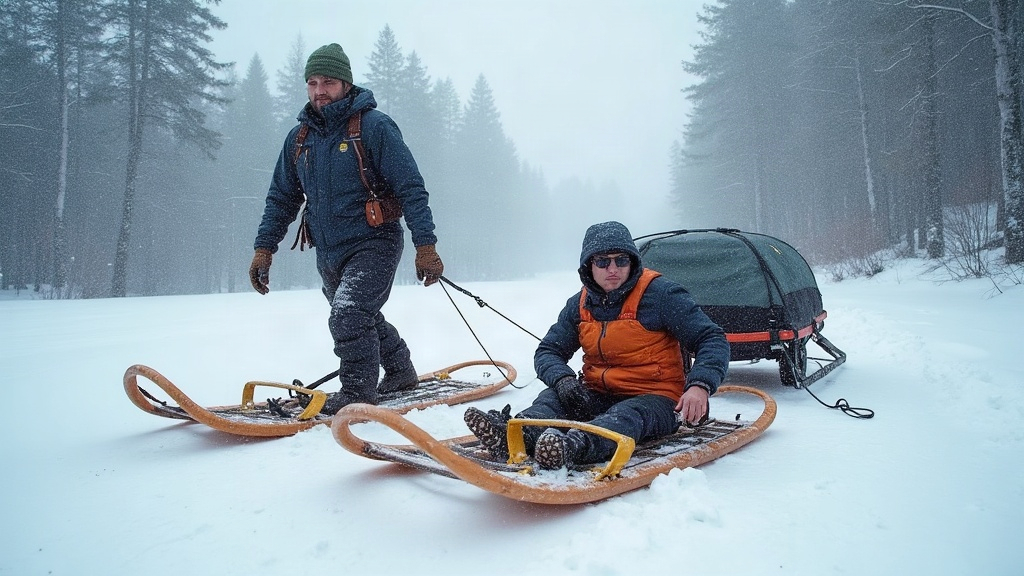
If you’re dragging a loaded sled through deep, untracked powder, the whole wood-versus-aluminum debate boils down to one trade-off: wood gives you better flotation and holds up better under sustained heavy loads, while aluminum frames save weight and grip better once the trail firms up or turns to ice. Ask most veteran haulers pulling a pulk through soft snow and they’ll tell you wood wins. But that answer shifts depending on how long your trip is, what the terrain actually looks like, and how much you want to spend.
Why the Load Matters More Than the Terrain
Once you clip into a sled, everything about how a snowshoe performs changes. You’re no longer just carrying your own weight. You’re fighting the drag and sideways pull of anywhere from 50 to 150-plus pounds trailing behind you. That changes the math:
- Every step sinks deeper, which makes flotation area the thing that decides whether you’re exhausted by noon or still moving at dusk.
- Bindings and decking absorb repeated jolts from awkward, off-balance steps you wouldn’t normally take.
- Any weak spot, loose lacing, a hairline crack in a frame, gets found out fast on a three- or four-day trip.
This is the point where the wood-vs-aluminum argument stops being theoretical and starts being about whether you finish the trip comfortably or limp in on blistered ankles.
Wooden Traditional Snowshoes: The Flotation Champions
Traditional wood-and-rawhide shoes (or wood with synthetic lacing), the classic Ojibwa, Huron, and Bearpaw shapes, were refined over centuries for exactly this job: moving loads through deep snow.
Strengths:
- Bigger footprint — a 48 to 56 inch Ojibwa or Alaskan-style shoe floats you in powder that would swallow a smaller aluminum pair whole.
- Flex that forgives — the wood frame gives a little, soaking up the jolt when a loaded sled yanks sideways on uneven snow instead of transmitting it straight into your ankle.
- You can fix it in the field — a split lace or a minor frame crack can often be patched with cordage and a pocketknife, which matters a lot when you’re three days from the truck.
- Holds up in real cold — wood doesn’t go brittle the way cheaper plastics or lower-grade metals can once temperatures drop past -30°F.
Weaknesses:
- Noticeably heavier, often 4 to 6 lbs per shoe versus 2 to 3 lbs for aluminum.
- Rawhide lacing needs upkeep: drying out, re-tensioning, occasional re-lacing after a hard season.
- Traction on icy or packed trail is mediocre at best.
Aluminum Frame Snowshoes: Built for Speed and Mixed Terrain
Modern aluminum-framed shoes (MSR, Tubbs, Atlas and similar) pair synthetic decking with built-in steel crampons for bite.
Strengths:
- Lighter on your legs over a long haul, especially on routes that aren’t pure deep powder from start to finish.
- Serious traction — steel crampons dig into ice, hardpack, and side-hill traverses in a way wood frames simply can’t match.
- Barely any maintenance — no rawhide to dry, no tension to check.
- Decent flotation for their size, and you can bolt on float tails if you need more.
Weaknesses:
- Standard flotation area is smaller, so you sink more in true deep powder unless you go oversized or add tails.
- The rigid frame passes more shock straight to your bindings and ankles when the sled jerks sideways.
- Harder to fix on the trail. Bend a frame or snap a crampon mount and that shoe is probably done for the trip.
Head-to-Head: Hauling Heavy Sleds in Deep Powder
| Factor | Wooden Traditional | Aluminum Frame |
|---|---|---|
| Flotation in deep powder | Excellent | Good to Fair (needs float tails) |
| Weight per shoe | Heavier (4-6 lbs) | Lighter (2-3 lbs) |
| Traction on ice/hardpack | Weak | Strong (steel crampons) |
| Shock absorption with sled drag | Better (flex) | Stiffer |
| Field repairability | High | Low |
| Cold-weather durability | Very good | Good (check plastic decking rating) |
| Price range | $150-$350 (handmade) | $150-$300 (production) |
Which Should You Choose?
- Go wooden traditional if your route is mostly untracked deep powder, you’re out for multiple days with no resupply, and you’d rather carry something you can repair with a knife and some cord than something with fancier traction.
- Go aluminum if your haul crosses mixed ground, packed trails, icy river crossings, wind-scoured ridgelines, where crampons end up mattering just as much as float.
- Or split the difference: plenty of haulers keep wood shoes for the deep-snow stretches and switch to aluminum once they hit trailhead sections or packed trail, particularly on supported expeditions where gear swaps are easy.
Practical Tips for Sled-Hauling Snowshoers
- Size up, always. When you’re hauling a loaded sled, go with the biggest shoe your stride can handle. Underfloating is probably the number one reason people burn out in deep snow by mile three.
- Test your bindings with your actual boots or mukluks before you buy, not after. A binding that loosens under sled tension isn’t a minor annoyance, it’s a safety problem.
- Check lacing and decking before a long trip, not during it. That’s when a weak spot decides to fail, not on some easy afternoon loop near the car.
- Use poles alongside the sled harness. When the sled pulls unevenly on a side-slope, poles are what keep you upright.
Conclusion
For hauling a heavy sled through deep, unbroken powder, wood traditional snowshoes usually come out ahead: better flotation, more forgiving flex, and the ability to patch them yourself if something breaks miles from anywhere. Aluminum earns its keep once the terrain turns mixed or icy, where traction and lighter weight outweigh raw float. Neither one is “better” in any absolute sense. It really comes down to matching the shoe to the snow you’ll actually be walking through and the trip you’re actually planning.