Preventing Food from Scorching in Titanium Pots on Twig Stoves
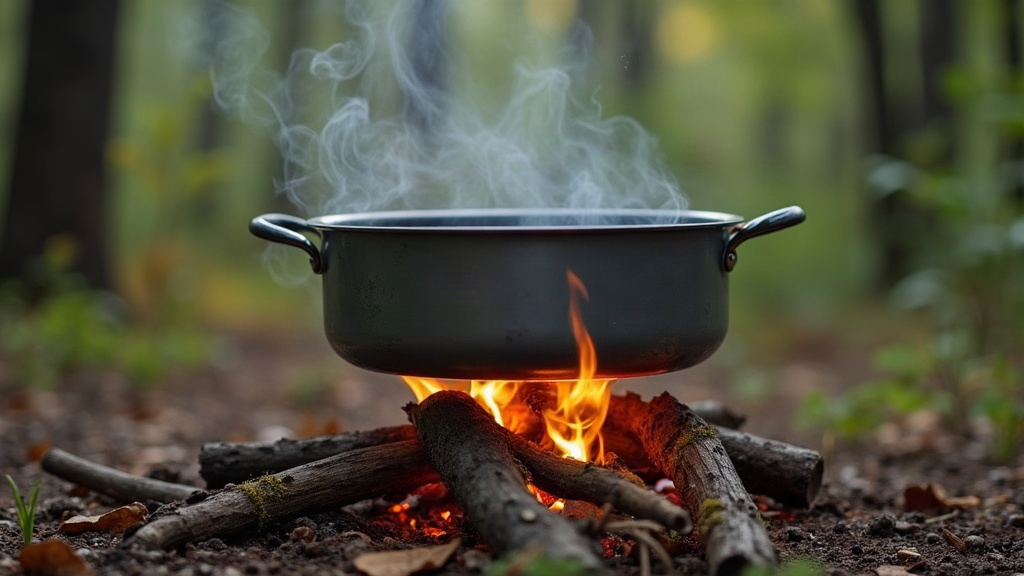
Why Your Titanium Pot Keeps Scorching Over a Twig Stove
Titanium pots scorch easily over twig stoves for a simple reason: titanium is a lousy heat conductor, and twig stoves throw wild, flickering flames right against those thin walls. It’s not a bad pot. It’s a heat management problem. Fix the heat, the moisture, and the flame, and your rice, oatmeal, and stews stop welding themselves to the bottom.
Why Titanium Scorches More Than Steel or Aluminum
Backpackers love titanium because it’s absurdly light and nearly indestructible. But it has one real weakness in the kitchen department: poor thermal conductivity. Aluminum spreads heat like butter across the whole pot base. Titanium refuses to. Heat just piles up directly above the flame, so you get one aggressive hot spot while the rest of the pot barely warms up. That’s how you end up with the bottom inch of your rice charred black while the top layer is still crunchy.
Twig stoves make this worse in three ways:
- They produce irregular, high flames that spike the second a dry twig catches
- They concentrate heat in a small central point instead of fanning it out
- They’re nearly impossible to modulate. There’s no simmer dial, no click-down valve, just fire doing what fire wants
Put titanium’s hot-spot habit next to a twig stove’s chaotic flame and scorching is basically the default outcome. Unless you fight it on purpose.
Core Strategies to Prevent Scorching
1. Add Extra Liquid and Stir Constantly
Starchy foods, rice, oatmeal, mac and cheese, are the usual troublemakers. They settle to the bottom and glue themselves there. Add roughly 10-20% more water than the recipe says, and stir every 30 to 60 seconds once things start bubbling. Even that thin extra film of liquid is enough to keep the food from bonding directly to the hot spot.
2. Use the “Boil, Then Off-Heat Steep” Method
Rather than babysitting rice over an open flame for fifteen straight minutes, try this instead:
- Bring the water to a full rolling boil.
- Drop in your food, give it one stir.
- Pull the pot off the stove (or let the fire burn down to coals).
- Cover it and let it sit for 8-12 minutes, finishing on residual heat alone.
This cuts way down on prolonged contact with active flame, which is honestly the number one cause of scorched pots in the backcountry.
3. Manage the Flame, Not Just the Food
A twig stove punishes lazy fuel habits and rewards discipline:
- Feed it small, thin twigs, one or two at a time, instead of tossing in a fat chunk that flares up out of nowhere
- Once the food is simmering, switch over to glowing embers rather than open flame. Embers throw softer, steadier heat that won’t torch your dinner
- Skip resinous or damp wood. It pops and flares unpredictably, exactly when you don’t want it to
4. Use a Heat Diffuser or Improvised Spacer
A cheap titanium or stainless mesh diffuser, set between the flame and the pot bottom, breaks up that concentrated heat column before it hits the metal. Forgot to pack one? Even a flat stone warmed near the fire (not sitting in the flame itself) works as a makeshift buffer under the pot.
5. Choose Pot Shape Wisely
A wide, shallow titanium pot spreads a twig stove’s heat far better than a tall, narrow one. If you’re pot shopping specifically for wood-fire cooking, go wider at the base. It dilutes the intensity of that single hot spot instead of letting it concentrate.
Foods That Need Extra Care
- Rice and grains: the highest scorch risk of anything you’ll cook. Always use the off-heat steep method.
- Instant noodles/pasta: stir nonstop, keep the flame low
- Freeze-dried meals rehydrated in the pot: add water in stages, stir often
- Anything with sugar or sauce: sugar caramelizes almost instantly on a hot spot, so keep an eye on it every few seconds, not every few minutes
Cleaning Scorched Titanium
Burned anyway? It happens. Don’t grab a metal spoon and start scraping. Soak the pot in warm water for 10-15 minutes first, then work it loose with a soft sponge or the flat edge of a spork. A baking soda paste will pull off stuck-on carbon without scratching either the anodized coating or bare titanium underneath.
Scorching in a titanium pot isn’t a manufacturing flaw, it’s just physics doing its thing. Uneven heat conduction meets an unpredictable wood flame, and you get a hot spot that torches food fast. Add a bit more liquid, stir more than feels necessary, switch to ember heat once things are simmering, and use a diffuser or a wider pot. Do that, and rice, oatmeal, and one-pot meals come out clean over a twig fire, no scraping burnt crust off your gear every single night.