Liner Socks vs Heavy Wool Socks: Stop Heel Blisters on Descents
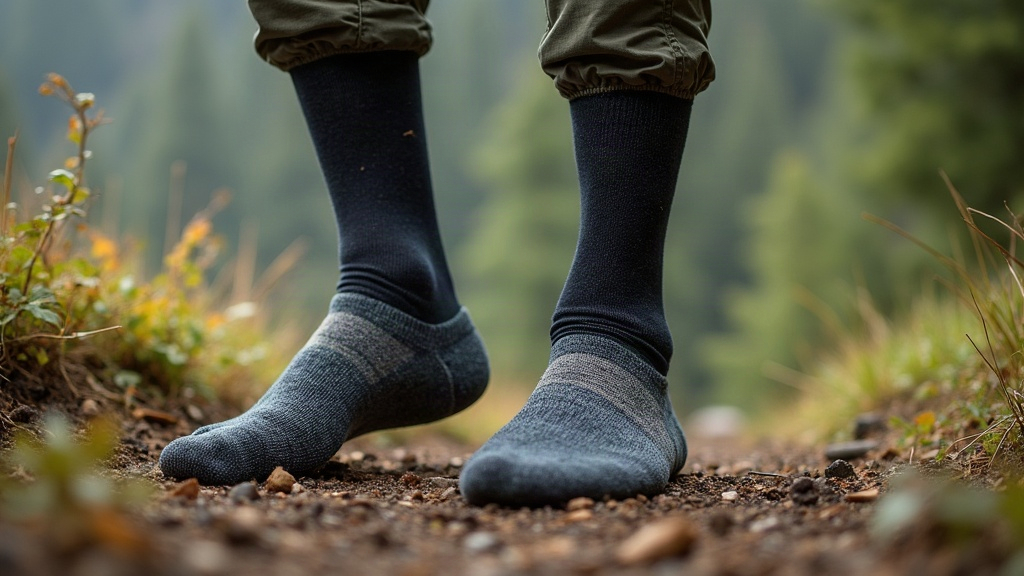
If you’ve ever limped off a steep descent with a raw, weeping heel blister, you already know the real enemy isn’t distance. It’s friction. The question of liner socks vs single heavy wool socks comes up constantly among hikers chasing a blister-proof system, and honestly, the answer depends on your foot shape, your boot fit, and how steep your descents actually get. Below is a practical breakdown of how each option performs, when to combine them, and what actually stops heel blisters on those long downhill stretches.
Why Heel Blisters Happen on Descents
On steep descents, your foot slides forward and your heel keeps lifting and re-seating inside the boot with every single step. This creates:
- Shear force between your skin and the sock (not just pressure)
- Repeated micro-movement that heats and softens the skin
- Moisture buildup from sweat, which cranks up friction even more
Blisters show up when friction outpaces your skin’s ability to adapt. Simple as that. The sock system you choose either absorbs that shear or hands it straight over to your skin.
The Case for a Single Heavy Wool Sock
A thick merino wool sock (think Darn Tough or Smartwool heavyweight) gives you:
- Cushioning that softens the pounding on steep, rocky trails
- Moisture-wicking that keeps feet noticeably drier than cotton ever could
- Durability for multi-day treks without adding much pack weight
Downside: a single sock still moves with your foot, not independently of it. If your boot has any heel slip at all, that sock-to-boot friction travels straight to your skin. Heavy wool also traps more heat, which softens skin further and makes it more blister-prone on long, hot descents, say, three miles of switchbacks in July.
The Case for a Liner + Wool Combo
The liner sock system (a thin, tight-fitting fiber like CoolMax or thin merino, worn underneath a cushioned wool sock) works on a completely different principle:
- The liner moves with your foot
- The wool sock moves with your boot
- Friction happens between the two sock layers, not against your skin
That’s the mechanical trick that makes liners work so well: they relocate the friction point away from your heel entirely. For hikers with a history of heel blisters, especially those with narrow heels tucked into slightly roomy boots, this is often the single biggest fix available. One hiker I know went from blistering on every descent over 1,500 feet to zero issues after switching, same boots, same trail, just a thin liner added underneath.
Which One Should You Choose?
Choose liner + wool combo if:
- You have chronic heel blisters despite well-fitted boots
- Your descents are long (2,000+ feet of steep loss)
- You sweat heavily or hike in warm conditions
- Your boots have any detectable heel lift when laced normally
Choose a single heavy wool sock if:
- Your boots fit precisely with zero heel slip
- You prioritize pack weight and simplicity
- You’re doing shorter day hikes on moderate terrain
- You’ve never had blister issues with this setup before
Field-Tested Tips to Prevent Heel Blisters
- Lace for descents: use a heel-lock (surgeon’s knot) lacing technique to stop forward foot slide before it ever reaches your socks.
- Break in new boots gradually. Most heel blisters trace back to unbroken-in boots, not sock choice, no matter what gear forums tell you.
- Apply a thin layer of anti-chafe balm (like Squirrel’s Nut Butter) directly on the heel as a backup, regardless of which sock system you run.
- Carry a spare pair of liners. If your feet sweat heavily, swapping liners mid-hike resets both friction and moisture almost instantly.
- Test your system on a short descent first. Never debut a new sock combo on your big descent day. That’s asking for trouble.
Common Mistake: Doubling Up Wrong
Wearing two heavy socks stacked together is not the same as a liner system, even though it feels like it should be. Two thick socks bunch up, shift as one unit, and often make blisters worse by adding bulk without ever solving the shear problem. The liner needs to be thin and snug; the outer sock is what provides the cushioning. Mix that up and you’re just wearing two socks for no real benefit.
Conclusion
For steep descents, the liner-plus-wool combination beats a single heavy wool sock for most hikers prone to heel blisters, because it tackles the actual mechanical cause (shear friction) instead of just piling on cushioning. If your boots fit perfectly and you’ve genuinely never had issues, a single heavy wool sock is still a lighter, simpler choice, no argument there. But if heel blisters keep showing up trip after trip, switching to a liner system paired with proper lacing technique is the most reliable fix you’ll find on the trail.